The Paradox of Being a Woman
Why I Felt Most Like a Woman Only After My Bleeding Stopped
For decades, I believed my womanhood was defined by the rhythm of my cycle—a monthly reminder of my capacity to create, to nurture, and to bleed. I thought that when the fire of my fertility finally flickered out, I would be left in the cold, a shadow of my former self.
I couldn’t have been more wrong.
The paradox of this transition is that as my bleeding stopped, the noise of the world stopped with it. I didn’t lose my essence; I lost the frantic need to perform it. In the space where my cycle used to be, I found a new, steadier heat—a high-energy power that doesn’t need to shout to be felt. I didn’t “shrink” into menopause; I finally expanded into the woman I was always meant to be. Now, the goal isn’t to survive the change—it’s to master the depth of it.
I used to chase headlines. As a journalist, my body was a vehicle for the story—fueled by adrenaline, deadlines, and the constant, high-frequency stress of “what’s next.” I didn’t know it then, but I was borrowing time from my own biology.
But the headlines were only the surface. My nervous system was already carrying a map of scars long before I entered a newsroom. I lived through the visceral trauma of the Civil War in the 90s, where survival was a daily meditation. I navigated a traumatic domestic situation and highly painful early relationships that taught my body to always be on guard.
I tried to outrun the pain. I moved continents. I went through a shattering first divorce. I eventually “went nuts” in the way that only a woman seeking salvation can—I left everything behind to live in a spiritual community. But even there, in a place meant for peace, I denied my body rest. I spent years caring for the elderly and wheelchair-bound, taking the night shifts so I wouldn’t miss the daily activities. I was terrified of missing out on life, so I stopped sleeping.
Menopause arrived at my door uninvited and far too early. It was a genetic legacy, yes—my mother, grandmother, and auntie all walked this path early—but my life was the invitation. The war, the trauma, the migration, the sleepless nights—they acted like an accelerant.
When it hit, it wasn’t the graceful spiritual awakening I had read about. It was torture.
It was the heat rising in a meeting, the brain fog clouding my mind, and the insomnia that turned nights into battlegrounds. It was a physiological bill coming due for a lifetime of high-intensity survival. I wanted desperately to forget it.
But here lies the great paradox, the secret that society forgets to tell us while it is busy discarding us as “older women.”
Somewhere in the middle of that storm, the narrative flipped. Society told me that without my cycle, without the ability to bear children, I was “done.” I was invisible. Yet, inside my own skin, for the first time in my life, I didn’t feel done. I felt real.
After 50, stripped of the hormonal roller coaster and the biological imperative to nurture everyone else, I finally met myself. I felt more grounded, more sensuous, and more powerful than I ever did in my youth. I realised that the “change” wasn’t an ending; it was an initiation.
For the last 30 years, through the lens of therapeutic yoga, I have been decoding this transition. We need to talk about the trauma of the symptoms, yes. But we also need to talk about the immense power waiting on the other side of them.
The Grandmother Hypothesis & Indigenous Wisdom
The Village Elder vs. The Invisible Woman
“In modern Western society, menopause is treated as a deficiency—a failure of the body to remain young. But if we look at anthropology and evolutionary biology, menopause is actually a superpower.
There is a concept in evolutionary science called The Grandmother Hypothesis. Humans are one of the only species on Earth (along with Orca whales) where females live for decades after they stop reproducing. Why would nature select for this? The answer is simple and profound: survival.
In hunter-gatherer societies, and among indigenous peoples, the post-menopausal woman was not ‘retired.’ She was promoted. Because she was no longer tethered to the immediate, exhausting demands of pregnancy and nursing, she became the resource for the entire tribe. She was the one who knew where the food was during a drought. She was the one who knew which herbs healed a fever.
In many Native American traditions, it is said that when a woman bleeds, she is shedding her power to cleanse the earth. But when she stops bleeding, she retains that power for herself. She begins to hold her ‘wise blood’ inside. She transforms from the Nurturer into the Wisdom Keeper.
I think of the Mayan midwives, who only stepped into their full power as healers after their cycles ended. I think of the matriarchs in traditional villages who oversaw the gardens and the grandchildren, ensuring the lineage survived.
We are biologically wired to be leaders in the second half of our lives. The torture of menopause—the heat, the insomnia, the shifting moods—is perhaps the fire of that initiation. It is the body burning away the ‘pleaser’ so the ‘leader’ can emerge. We are not becoming less; we are becoming concentrated.
Estrogen is the hormone of “accommodation”—it biologically makes us want to care for others to ensure the survival of offspring.
When Estrogen drops, the “veil of accommodation” is lifted. This is why women in their 50s often stop tolerating bad behaviour or bad jobs. It feels like “irritability” or “anger,” but you can reframe it for them as “clarity.” That is the paradox: The loss of the hormone makes you gain your truth.
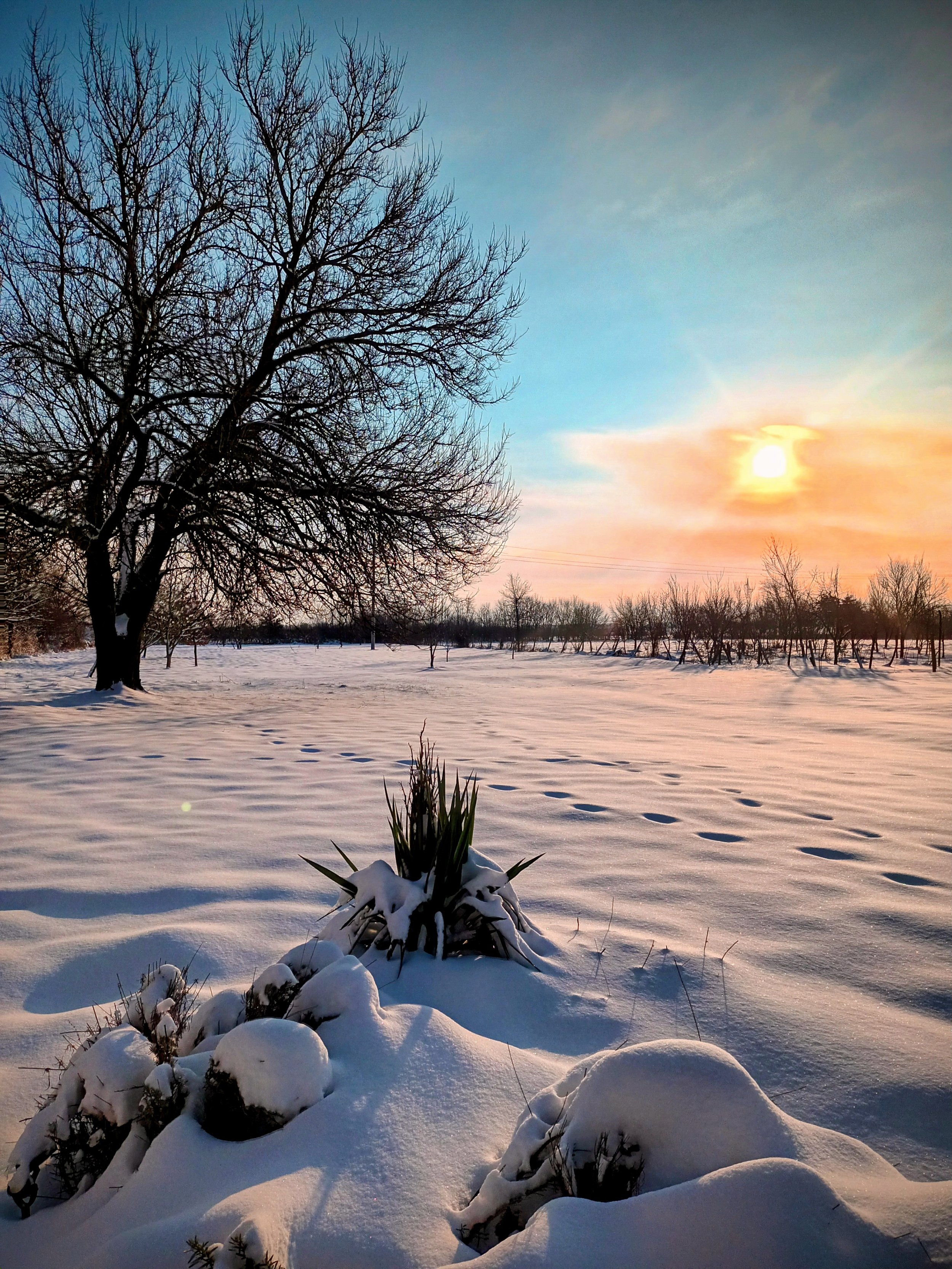
The Language of the Thaw: A January Update
They say the Inuit have dozens of words for snow, each describing a specific state of being: Qanik for the falling flakes, Mauja for the deep drifts we sink into. As I reached the “peak of hibernation” this January, I realised that we need a similar vocabulary for our internal landscapes—especially during the transformative season of menopause.
For the past few weeks, I have been in my own version of Aput—the snow that blankets the ground, silent and still. This hasn’t been a period of stagnation, but one of deep, necessary restoration.
Sila: The Breath of Change
In Inuit culture, Sila is more than just the weather; it is the “spirit” and “intelligence” of the universe. A common sentiment is: “We do not change the weather; the weather changes us.” My journey through menopause has felt exactly like this. It is a biological “winter” that requires us to stop fighting the wind and instead learn the texture of the snow. I have had to learn when the ground beneath me is Nattaqqornaq (hard and ready for travel) and when it is Mauja (soft, deep, and requiring me to slow down).
New Paths at the Wellbeing Academy
As the light begins to “fill the world” again, I am thrilled to emerge from hibernation with new programs designed to help you navigate your own seasons of change.
The Menopause Journey: A dedicated module on adapting to the “internal weather” of hormonal shifts.
The Art of Hibernation: Learning how to use rest as a strategic tool for growth, not just an escape.
Sila-Centred Wellbeing: Programs focused on aligning your personal energy with the natural cycles of the year.
“The arch of sky and mightiness of storms / Have moved the spirit within me...”
Like the shaman Uvavnuk, I am emerging from this cold January “trembling with joy” for what is to come. Our “small adventures and fears” often feel big, but when we look at the vast, white horizon, we realise the only great thing is to live to see the light return.
1. The Free Community Gathering (Once a Month)
Name: The “Second Spring” Circle or Pause to Menopause
Duration: 60 Minutes
Goal: To break the isolation and offer one immediate tool for relief. Open House. It is low-pressure, supportive, and designed to show women that they are not alone.
0-15 min: The Check-In. Opening circle. A safe space to say, “This is how I feel today” (Rage, grief, hot, tired).
15-30 min: The Talk. I share a short insight (e.g., “Why stress makes hot flashes worse”).
30-50 min: The Practice. Gentle, accessible movement. No complex yoga.
Example: Cooling Breath (Sitali) and restorative pose for adrenal fatigue.
50-60 min: Closing. Indigenous wisdom quote to close.
2. The Deep Dive Program (3 Sessions / Month)
Program Title: Anchored: The Menopause Resilience Program
Format: 3 Weekly Sessions (60 Minutes each) + Homework
Week 1: The Physical Body – Cooling the Fire & Soothing the Sleepless
Focus: Managing the acute symptoms (Hot flashes, Insomnia, Joint Pain).
The Science: How cortisol hijacks our hormones. Why we need to switch from “High Intensity” to “High Stability.”
The Yoga Therapy:
Breath: Chandra Bhedana (Left nostril breathing) to activate the parasympathetic nervous system.
Asana: Cooling flows, hip openers to release stored stress, and specific sequences for joint mobility.
Mindfulness: Yoga Nidra specifically scripted for insomnia.
Week 2: The Emotional Body – From Rage & Grief to Clarity
Focus: The psychological shift, “Menopausal Rage,” and the loss of the “Mother” role.
The Science: The drop in estrogen affects serotonin. It’s not “in your head,” it’s in your brain chemistry.
The Yoga Therapy:
Breath: Bhramari (Humming Bee Breath) to soothe anxiety and vibrationally massage the vagus nerve.
Asana: Grounding standing poses (Warrior II, Goddess) to channel rage into power and stability.
Introspection: Journaling prompt: “Who am I when I am not taking care of others?”
Week 3: The Spiritual Body – The Grandmother & The Wise Woman
Focus: Reclaiming the role of the Elder, spiritual purpose, and the “Second Spring.”
The Wisdom: Discussing Indigenous cultures where post-menopausal women become the Shaman, the Leader, or the “Keeper of the Garden.”
The Yoga Therapy:
Breath: Sama Vritti (Box Breathing) for balance and focus.
Asana: Heart openers (supported) to embrace the new phase of life with courage.
Meditation: A visualisation of the “Inner Wise Woman.” Connecting to the intuition that strengthens after 50.
The Menopause Resilience Program
The Great Transition: From High Intensity to Therapeutic Depth
It is time to change the narrative. For too long, we’ve been told that menopause is a condition to be “fixed” or a “decline” to be mourned. It isn’t.
Menopause is not a disease to be cured; it is a high-energy transition that requires management.
Think of it as a biological software update. The old ways of pushing our bodies—the “grind” culture and high-intensity workouts—often backfire during this phase. When we double down on high intensity, we inadvertently spike our cortisol levels, which acts like fuel on the fire for common symptoms like hot flashes, anxiety, and sleep disruption.
The Method: Finding Your Depth
To thrive, we must shift our strategy from High Intensity to Therapeutic Depth. This isn’t about doing “less”; it’s about doing things differently to support our changing nervous systems.
Breathwork: Utilising the breath to down-regulate the nervous system and manage “internal heat.”
Mindfulness: Developing the “witness” mind to navigate the emotional fluctuations of this transition.
Specific Asana: Moving away from repetitive strain and toward postures that build structural integrity, bone density, and pelvic health without overtaxing the adrenals.
Join the Global Conversation
We are part of a massive, quiet revolution. In just four years, there will be one billion menopausal and postmenopausal women on this planet. That is one billion voices, one billion sources of wisdom, and one billion reasons to get this right.
I invite you to:
Share this article: If you know someone navigating this transition who feels overwhelmed, please pass this along.
Explore my newest offerings: I’ve designed these specifically to guide you through the shift from intensity to depth.
Talk about it: Use the comments or hit reply. What has been your biggest challenge? What has brought you relief?
Let’s stop hitting “pause” on our lives and start navigating this transition with the depth it deserves.